 Recharge des véhicules électriques en courant alternatif (CA) ou en courant continu (CC) : comment cela modifie la conception des connecteurs et des câbles
Dec 02, 2025
De loin, une borne de recharge domestique et une borne de recharge rapide autoroutière peuvent sembler identiques : une simple prise au bout d’un câble noir. Pourtant, leurs fonctions sont bien différentes. Le connecteur d’une borne de recharge de 7 kW en courant alternatif a une durée de vie très différente de celui d’une borne de recharge de 300 kW en courant continu.
La différence entre la charge en courant alternatif (CA) et en courant continu (CC) ne se limite pas au temps de charge. Elle détermine également l'emplacement des composants électroniques de puissance, l'intensité du courant traversant les contacts, la température atteinte et la rigidité requise du câble.
Si vous avez besoin d'un rappel sur la signification des différents niveaux de charge dans la vie de tous les jours, ce aperçu des niveaux de recharge des véhicules électriquesest un bon point de départ.
Où le courant alternatif et le courant continu se situent entre le réseau et la batterie
Sur un chargeur secteur, le réseau électrique fournit le courant alternatif (CA) et la voiture assure la recharge. La prise murale délivre le courant alternatif, tandis que le chargeur embarqué (OBC) à l'intérieur du véhicule le convertit en courant continu (CC) pour la batterie. La puissance est limitée par la capacité de l'OBC, généralement comprise entre 3,7 et 22 kW pour les véhicules légers. Dans cette configuration, le connecteur et le câble sont soumis à un courant modéré et dégagent une chaleur modérée, car les composants les plus chauds et les plus complexes se trouvent à l'intérieur du véhicule.
Avec un chargeur rapide en courant continu, la charge est effectuée hors du véhicule. L'armoire convertit le courant alternatif du réseau en courant continu haute tension et l'achemine directement vers la batterie via le connecteur et le câble. La puissance peut facilement atteindre 50 à 400 kW, voire plus ; les contacts et conducteurs principaux sont donc soumis à un courant beaucoup plus élevé et fonctionnent plus fréquemment à proximité de leurs limites thermiques.
Concrètement : le courant alternatif (CA) maintient les efforts les plus intenses à l'intérieur de la voiture, tandis que le courant continu (CC) les transmet à la prise et au câble.
CA vs CC
CA : puissance limitée par l’ordinateur de bord du véhicule, courant plus faible dans le câble, charge thermique réduite au niveau du connecteur.
CC : puissance limitée par la station et la batterie, courant élevé dans le câble, chaleur beaucoup plus importante à gérer au niveau du connecteur.
Un même véhicule peut être facile à brancher sur une prise secteur et très exigeant sur une prise CC rapide.
Comment le courant alternatif et le courant continu affectent les composants internes des connecteurs
Une tension et un courant plus élevés ne modifient pas seulement les valeurs nominales indiquées. Ils obligent le concepteur du connecteur à faire des choix différents en matière d'isolation, de géométrie des contacts et de disposition des broches.
Niveaux de puissance, isolation et conception des contacts
La charge CA légère fonctionne généralement aux tensions secteur habituelles. Les systèmes de charge rapide CC utilisent des batteries haute tension de 400 V ou 800 V. Avec l'augmentation de la tension, le connecteur doit être dimensionné en conséquence. Les distances de fuite et d'isolement à l'intérieur du boîtier s'allongent, les matériaux isolants doivent être plus performants et la géométrie interne doit éviter les arêtes vives et les zones de rétention de poussière susceptibles d'affaiblir l'isolation à long terme.
Le profil de courant évolue tout autant. Dans les applications domestiques et professionnelles en courant alternatif, les connecteurs supportent généralement quelques dizaines d'ampères par phase. Sur un connecteur rapide en courant continu, chaque contact principal peut être amené à gérer plusieurs centaines d'ampères. Ceci incite les concepteurs à privilégier des surfaces de contact plus larges sur les broches d'alimentation en courant continu et à contrôler beaucoup plus précisément la résistance de contact. Les systèmes à ressort et à lame doivent maintenir une force de contact constante pendant des milliers de cycles d'insertion/d'ouverture, car une légère augmentation de la résistance à courant élevé peut rapidement se traduire par un échauffement important.
En pratique, les concepteurs de connecteurs se concentrent sur trois aspects :
La tension détermine les lignes de fuite, les distances d'isolement et les matériaux d'isolation.
Le courant détermine la zone de contact, la qualité du placage et la conception du ressort.
Le cycle de service (la fréquence d'utilisation) détermine la marge de sécurité intégrée à tout ce qui précède.
Disposition et fonctions des broches
Les connecteurs AC et DC combinent tous deux des broches d'alimentation et de signal, mais dans des proportions différentes.
Un connecteur d'alimentation secteur pour usage domestique ou professionnel comporte généralement un ou trois conducteurs de phase, un neutre, une terre de protection et quelques broches de commande pour la signalisation et la détection de proximité. Il est suffisamment intelligent pour définir les paramètres de charge de base et vérifier que la fiche est correctement branchée avant la mise sous tension.
Un connecteur rapide CC conserve la mise à la terre de protection, mais le courant principal circule désormais par de grosses broches CC+ et CC– au lieu des phases et du neutre. Autour de ces broches se trouve un ensemble plus complet de contacts basse tension. Les signaux de pilotage et de proximité sont toujours présents, mais les connecteurs CC haute puissance intègrent souvent des lignes de communication et, dans de nombreuses conceptions, un système de détection de température dédié pour surveiller les parties les plus chaudes du connecteur.
Vus côte à côte :
Les connecteurs CA comportent des broches d'alimentation modestes et une simple paire de commandes.
Les connecteurs rapides CC comportent de très grandes broches d'alimentation entourées de nombreuses broches de signal et de détection.
À mesure que la puissance augmente, la taille des broches principales et le nombre de broches de signal ont tendance à croître.
Architectures de connecteurs pour courant alternatif et courant continu
Différentes normes résolvent le problème « AC + DC » avec différentes stratégies mécaniques.
Certains systèmes utilisent exclusivement des connecteurs pour le courant alternatif. Ce sont les prises que l'on trouve sur les voitures qui se rechargent en courant alternatif à domicile, au travail et aux bornes de recharge. Les boîtiers sont compacts, les poignées légères et l'agencement interne simple. La conception est optimisée pour un usage quotidien confortable et une longue durée de vie avec une consommation d'énergie modérée.
Les modèles combinés adoptent une approche différente. Ils intègrent une interface CA et des broches d'alimentation CC supplémentaires dans une seule prise véhicule, permettant ainsi à une seule prise d'accepter à la fois les fiches CA et CC. Cela réduit le nombre d'ouvertures à percer dans la carrosserie et offre aux conducteurs un point de repère unique lorsqu'ils s'approchent avec un câble. En contrepartie, la prise est plus volumineuse et plus complexe, et la conception thermique autour des broches CC est plus optimisée.
D'autres architectures évitent les prises combinées. Certaines normes séparent complètement le courant alternatif (CA) et le courant continu (CC) afin d'optimiser chacun pour sa fonction : les fiches CA restent petites et légères, tandis que les fiches CC peuvent être aussi grandes et robustes que nécessaire. Les nouvelles familles de connecteurs compacts adoptent une approche inverse et tentent de faire transiter à la fois le CA et le CC dans un seul boîtier compact. Cela permet de gagner de la place et de simplifier l'interface, mais exige davantage d'efforts en matière de réutilisation des broches, de conception de l'isolation et de stratégie de refroidissement.
Câbles et chaleur : pourquoi le courant continu a une apparence et une sensation différentes
Dimensions, poids et manutention du conducteur
Pour alimenter une voiture en courant alternatif pendant la nuit avec quelques kilowatts, il n'est pas nécessaire d'utiliser des câbles en cuivre de section importante. Les conducteurs peuvent rester de taille modérée, ce qui permet de conserver un câble suffisamment léger pour être manipulé facilement et suffisamment flexible pour être enroulé proprement dans un coin de garage.
Transporter des centaines de kilowatts de courant continu lors d'un arrêt bref pose un tout autre problème. Pour limiter les pertes par effet Joule et l'échauffement, les conducteurs nécessitent une quantité de cuivre bien plus importante. Or, plus de cuivre signifie une masse plus importante, ce qui alourdit et rigidifie le câble. Cette rigidité accrue se manifeste dès qu'on tente de plier le câble dans un espace restreint ou de franchir un trottoir, et le poids supplémentaire apparaît aux points de décharge de traction, là où le câble pénètre dans la poignée ou l'armoire.
En pratique:
Puissance CC plus élevée → âmes en cuivre plus épaisses → câble plus lourd et plus rigide.
Câble plus épais → charge plus importante sur les serre-câbles et les terminaisons.
Les câbles AC peuvent être réglés pour optimiser le confort ; les câbles DC, quant à eux, partent des limites thermiques et fonctionnent à rebours.
Les câbles de recharge en courant alternatif (CA) sont conçus pour un usage quotidien. Ils sont faits pour être manipulés d'une seule main, glissés entre les voitures dans une allée étroite et enroulés sans difficulté une fois la charge terminée. Les câbles de recharge rapide en courant continu (CC) doivent relever un défi plus important. Ils doivent supporter un courant très élevé tout en conservant une flexibilité suffisante pour que les conducteurs de différentes tailles et forces puissent positionner le connecteur sans avoir l'impression de lutter contre un équipement industriel. Le rayon de courbure minimal est choisi pour protéger les conducteurs et l'isolation, tout en restant compatible avec la configuration réelle des bornes de recharge.
Gaine extérieure, durabilité et câbles refroidis par liquide
Les câbles sont soumis à rude épreuve dans les lieux publics. Soleil, pluie, poussière et saletés de la route y sont monnaie courante. De plus, ils tombent sur le béton, frottent contre des arêtes vives et sont parfois pincés ou écrasés par des véhicules. Pour résister à de telles contraintes pendant des années, les câbles à courant continu sont généralement dotés de gaines extérieures plus épaisses et plus robustes. Les dispositifs anti-traction sont renforcés et les terminaisons sont conçues pour absorber les torsions et les tractions sans que ces contraintes ne soient directement transmises aux conducteurs.
À la maison, les câbles sont soumis à des conditions moins extrêmes, mais ils doivent tout de même résister à l'abrasion, à la poussière et aux variations de température tout au long de la durée de vie du chargeur. Leur gaine peut donc privilégier la souplesse et l'esthétique, pourvu qu'elle assure une robustesse de base.
Pour les fortes intensités de courant continu, l'ajout de cuivre et le recours au refroidissement naturel finissent par devenir impraticables. Le câble serait tellement épais et lourd que de nombreux utilisateurs auraient du mal à le manipuler, et des supports fixes deviendraient indispensables à chaque emplacement. Les câbles CC à refroidissement liquide résolvent ce problème grâce à un circuit de refroidissement placé à proximité des conducteurs. Le liquide de refroidissement circule près des âmes, évacuant la chaleur et permettant ainsi, à diamètre extérieur égal, de transporter un courant plus élevé sans surchauffe. En contrepartie, la conception est plus complexe : le circuit de refroidissement doit rester étanche et fiable pendant de nombreuses années, les fuites doivent être détectées et surveillées, et les tuyaux et capteurs doivent être acheminés de manière à préserver la flexibilité d'utilisation de l'ensemble.
C’est pourquoi un câble d’alimentation secteur peut rester fin et souple, tandis que les câbles d’alimentation CC à très haute puissance ont tendance à être plus épais, plus multicouches et, dans certains cas, à comporter des interfaces de refroidissement visibles.
Comment choisir les connecteurs et les câbles pour votre site
Les différents sites de recharge accordent une importance variable à la puissance, au confort, à la durabilité et au coût. Une petite borne de recharge domestique et un dépôt de bus peuvent tous deux être considérés comme des « projets de recharge pour véhicules électriques », mais ils se situent à des niveaux de conception très différents.
Application
Priorité au pouvoir
Maniabilité / confort
Priorité à la durabilité
Caractéristiques typiques des connecteurs/câbles
Climatisation domestique
Faible à moyen
Très haut
Durée de vie moyenne à longue en milieu tempéré
Fiches compactes, câbles fins et flexibles
Destination / lieu de travail AC
Moyen
Haut
Moyen à élevé
Boîtiers légèrement plus robustes, retour d'information clair sur le loquet
Recharge rapide publique en courant continu
Très haut
Moyen
Très élevé, abus en extérieur
Fiches plus grandes, câbles épais ou refroidis par liquide, robustes
Dépôts/chantiers navals
Élevé à très élevé
Moyen
Très élevé, de nombreux plugins par jour
Connecteurs robustes, câbles haute résistance, entretien facile
Sur les sites de vente de climatiseurs domestiques, la puissance est généralement considérée comme une priorité faible à moyenne, car la durée de fonctionnement nocturne est longue. Le confort d'utilisation est primordial, et la durabilité est axée sur une utilisation prolongée dans un environnement tempéré plutôt que sur une résistance à des conditions d'utilisation extrêmes.
Les conducteurs qui hésitent entre le niveau 1 et le niveau 2 à domicile peuvent utiliser notre Guide comparatif des bornes de recharge à domicile de niveau 1 et de niveau 2pour voir comment ces choix de matériel se comportent au quotidien.
Les climatiseurs de destination et de lieu de travail passent à l'étape supérieure : plus d'utilisateurs, plus d'événements de branchement, plus de demande pour des boîtiers robustes et des verrous fiables.
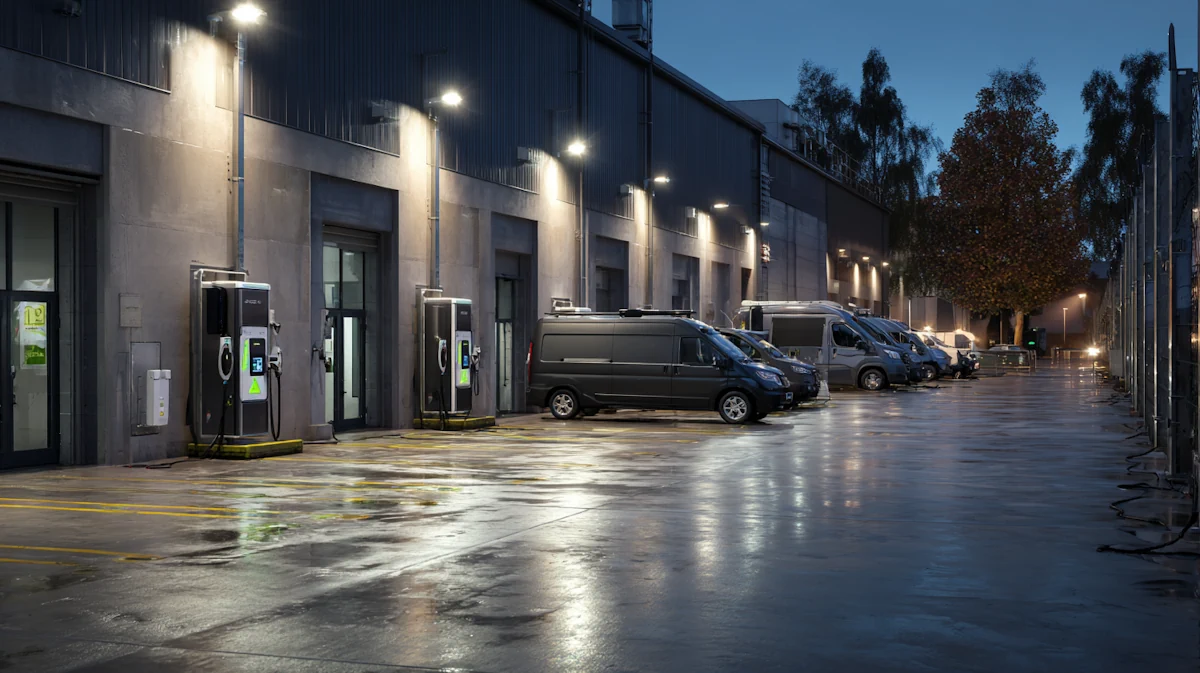
La recharge rapide publique en courant continu place la puissance au premier plan. Le confort d'utilisation reste important, mais est naturellement limité par la taille et le poids. La durabilité devient une priorité absolue, car l'équipement doit être utilisé en extérieur, par de nombreux utilisateurs différents et résister à des utilisations parfois inappropriées. Les dépôts de véhicules et les chantiers commerciaux se situent entre les bornes de recharge publiques en courant continu et les lieux de travail. La puissance varie de élevée à très élevée, et les connecteurs peuvent être branchés et débranchés de nombreuses fois par jour, sur plusieurs équipes. La stabilité des contacts, la robustesse mécanique et la facilité d'entretien sont tout aussi importantes que la puissance nominale.
Pour un aperçu complet de la manière dont les flottes combinent différents niveaux de recharge dans les dépôts, à domicile et sur les sites publics, consultez notre guide sur le niveau réel de besoins des flottes de bornes de recharge pour véhicules électriques.
Trois questions simples permettent généralement de trouver la bonne ligne dans le tableau :
Combien de temps chaque véhicule reste-t-il stationné ici ?
Combien de fois par jour une personne branche-t-elle et débranche-t-elle sa prise ?
À quel point l'environnement est-il agressif pour les câbles et les connecteurs sur une période de dix ans ?
Point de vue des abeilles ouvrières
Pour concrétiser ces principes, il est essentiel de considérer le choix des connecteurs et des câbles comme faisant partie intégrante de la conception du réseau électrique et du site, et non comme un simple détail esthétique. Un même niveau de charge peut nécessiter un matériel très différent selon l'environnement et le cycle d'utilisation.
Pour une utilisation domestique, professionnelle et en entrepôt, Workersbee conçoit des connecteurs et des câbles de charge CA alliant confort d'utilisation au quotidien et fiabilité à long terme, conformément aux normes régionales. L'accent est mis sur un fonctionnement fiable et une expérience utilisateur optimale dans les plages de puissance CA standard.
Pour la recharge rapide en courant continu publique et les dépôts à forte utilisation, Workersbee propose Connecteurs de charge rapide CC et des câbles conçus pour une capacité de courant élevée, une résistance de contact contrôlée et des performances mécaniques robustes, avec des options prévues pour un refroidissement avancé lorsque les exigences du projet requièrent une puissance plus élevée et des marges thermiques plus serrées.
EN SAVOIR PLUS


 CONTACTEZ-NOUS


 IPv6 RÉSEAU PRIS EN CHARGE
 Français